


In the Philippines, most drownings reported by police during Holy Week happen in rivers, followed by beaches, while young children are often lost close to home in wells, creeks and drains. Many deaths from floods, typhoons and boat accidents are not counted as drownings at all, so the true picture is wider than the official statistics. Police reported 37 Holy Week drowning deaths in 2024, mostly in rivers and then on beaches (Philippine Daily Inquirer, April 2024), and adding disaster and maritime deaths raised the official average by about 1,700 a year in 1980–2011 (Martinez, Go and Guevarra, 2016).
This guide is general information, not a substitute for training. In an emergency, call 911.
Rivers and creeks
Police reports describe rivers as the most common setting for drownings, with beaches next. In 2024 the Philippine National Police (PNP) recorded 37 drowning deaths on beaches and rivers during Holy Week, mostly in rivers (Philippine Daily Inquirer, April 2024). Over January to March 2024, the PNP counted about 80 drowning incidents in rivers and 20 on beaches, with the location of the rest not specified (Philippine Daily Inquirer, March 2024). Typical circumstances in news reports include:

- swimmers entering water that is deeper or faster than it looks;
- sudden drop-offs and strong currents, especially after rain;
- groups of children swimming without an adult;
- swimming after drinking alcohol. The PNP spokesperson said in 2023 that most Holy Week victims had been drinking (AFP, via Malay Mail, 10 April 2023).
River water also changes without warning: rain in the mountains upstream can raise levels quickly even when the sky above you is clear. The lifeguard rules described below apply to resorts and pools, not to open river spots, so do not assume anyone is watching.
Beaches and resorts
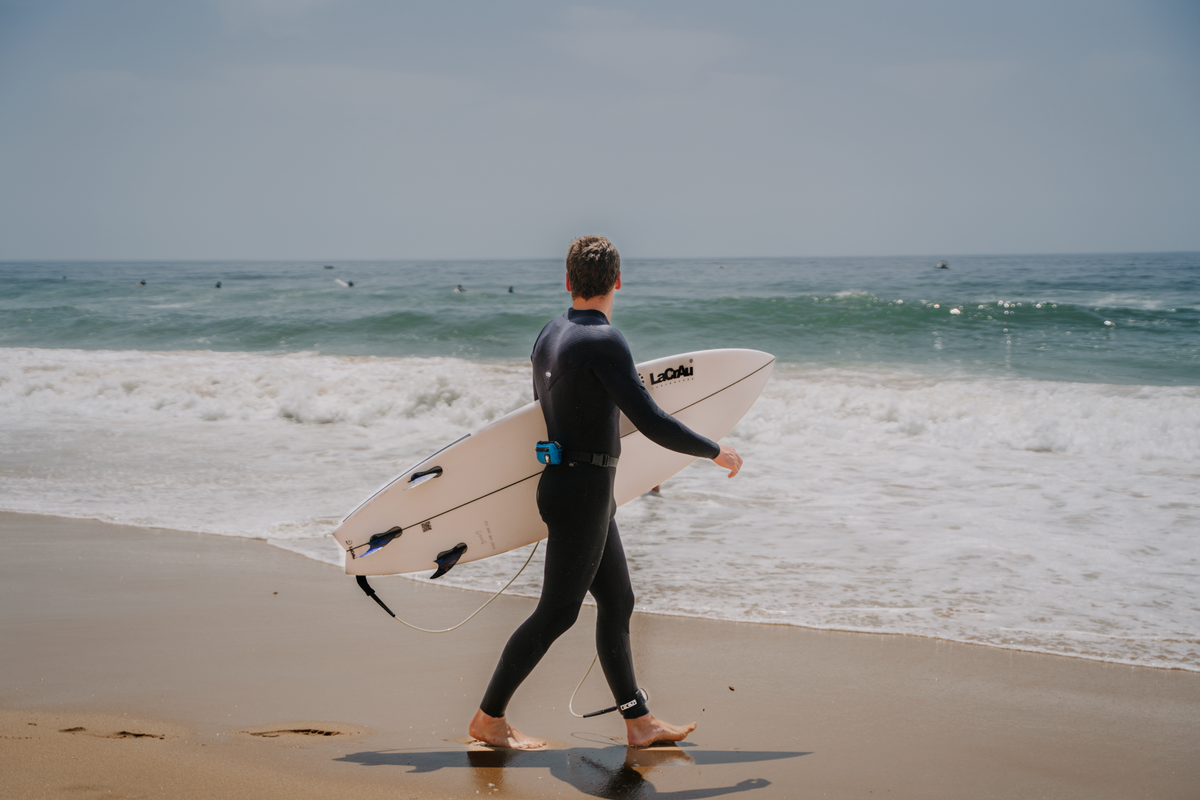
At the sea the main hazards are:
- Rip currents, which pull swimmers away from shore (see Rip currents and how to escape them);
- big waves and sudden deep water, which are especially dangerous for children. In 2023 the PNP said that, among minors, children were left to swim in the sea by themselves (Philippine Daily Inquirer, April 2023);
- no lifeguard on duty, or no lifeguard at all.
On lifeguards: the Philippine Coast Guard's Memorandum Circular 03-14 sets safety and security requirements for coastal and beach resorts and for vessels with pool facilities, including the qualifications and requirements of lifeguards (SunStar, 2 October 2017). We could not find the circular's own text online, so we describe it as reported. For public swimming and bathing places generally, the Department of Health's 1998 implementing rules for Chapter VIII of the Code on Sanitation state that "a swimming pool or bathing place shall have an adequate number of lifeguards in constant attendance when in use" (DOH, 30 January 1998, text as republished by Lawyerly). We have not checked whether the rules have been amended since, or how consistently they are enforced, so before you swim, check that a trained lifeguard is on duty and rescue equipment is visible.
At home and nearby: wells, drains and creeks
For young children, drowning is often close to home. Philippine research on child drowning identifies unrestricted access to water such as open dug wells, creeks, open drains and walkways over water as risks, especially where there is no barrier and no constant adult supervision. The same study found higher risk among children from low socio-economic and rural families and in homes without piped water (Guevarra et al., Children, 2021).
Floods and typhoons
Deaths in typhoons, floods and storm surges are generally classed as disaster deaths, not drowning. A 2016 study found that adding them, and maritime deaths, to official records raised the average from 2,496 to 4,196 drowning deaths a year (about 1,515 a year from disasters and 185 from maritime accidents, 1980–2011) (Martinez, Go and Guevarra, 2016). More in Typhoons, storm surge and flash floods.

Boats, ferries and bangkas
Boat accidents are also counted separately from drowning. We did not find a single official annual tally of boat-accident deaths in public sources. The 2016 study above puts the average at about 185 maritime deaths a year for 1980–2011 (Martinez et al., 2016), but that is old data.

The Maritime Industry Authority (MARINA) has recently focused on overloading and life jackets. In April 2025 its administrator asked passengers not to board a vessel they know is over capacity, and to report violations to MARINA or the Coast Guard (MARINA, 25 April 2025). After a ferry sinking off Basilan in January 2026, a MARINA spokesperson said the number of functional life jackets should match a vessel's authorised passenger capacity (GMA News, 1 February 2026).
Before boarding: wear a life jacket and do not board if the boat looks overloaded.
Where drownings are reported most
In Holy Week 2023 the PNP recorded the most drowning deaths in Calabarzon (19), Ilocos (14) and Central Luzon (10) (Philippine Daily Inquirer, April 2023). In Holy Week 2024 most cases were in Calabarzon, Ilocos, Cagayan Valley, Central Luzon and Western Visayas (Philippine Daily Inquirer, April 2024). Over January to March 2024, the highest fatalities were in Western Visayas (28), Calabarzon (27) and Central Luzon (20) (Philippine Daily Inquirer, March 2024). These counts reflect where people travel at that time and population size, not necessarily which places are most dangerous per person.
Before you swim: a quick checklist
- Is there a lifeguard on duty, and can they see you?
- Do you know how deep the water is and which way the current runs?
- Has it rained upstream or is a storm signal up?
- Is everyone who cannot swim wearing a properly fitted life jacket?
- Is someone watching the children, with no phone in hand?
- Has anyone been drinking?
- Do you know the emergency number (911) and the nearest hospital?
For more: How to prevent drowning, Recognising drowning and getting help. If you run a resort or lead group outings, keep rescue equipment ready, such as our Safety Buoys.
Related RESTUBE products


Sources
- Philippine Daily Inquirer. "PNP logs 37 Holy Week deaths due to drowning" (April 2024). https://newsinfo.inquirer.net/1924760/pnp-on-monitoring-37-deaths-due-to-drowning
- Philippine Daily Inquirer. "Over 200 died due to drowning from January to March: PNP" (March 2024). https://newsinfo.inquirer.net/1923914/over-200-individuals-died-due-to-drowning-from-january-to-march-pnp/amp
- Philippine Daily Inquirer. "PNP: 72 Holy Week deaths due to drowning nationwide" (April 2023). https://newsinfo.inquirer.net/1754421/fwd-pnp-62-died-of-drowning-during-holy-week/amp
- AFP via Malay Mail. "Philippines police confirm 72 dead from drowning after week-long holiday" (10 April 2023). https://www.malaymail.com/news/world/2023/04/10/philippines-police-confirm-72-dead-from-drowning-after-week-long-holiday-leading-to-easter/64063
- Guevarra JP, Peden AE, et al. Children 8(1):29, 2021. https://doi.org/10.3390/children8010029 (full text: https://pmc.ncbi.nlm.nih.gov/articles/PMC7825742/)
- Martinez RE, Go JJ, Guevarra J. Western Pacific Surveillance and Response Journal 7(4), 2016. https://ojs.wpro.who.int/ojs/index.php/wpsar/article/view/448
- SunStar. "Deployment of lifeguards reiterated" (2 October 2017), describing Philippine Coast Guard Memorandum Circular 03-14. https://www.sunstar.com.ph/more-articles/deployment-of-lifeguards-reiterated
- Department of Health. Implementing Rules and Regulations of Chapter VIII, "Public Swimming or Bathing Places," of the Code on Sanitation of the Philippines (P.D. 856), adopted 30 January 1998, as republished by Lawyerly. https://dev.lawyerly.ph/laws/42156
- MARINA. "MARINA Administrator calls for cooperation of sea passengers in reporting possible overloading" (25 April 2025). https://marina.gov.ph/2025/04/25/marina-administrator-calls-for-cooperation-of-sea-passengers-in-reporting-possible-overloading/
- GMA News. "MARINA to probe lack of life vests, overloading in Basilan ferry sinking" (1 February 2026). https://www.gmanetwork.com/news_duplicate/topstories/nation/974932/marina-to-probe-lack-of-life-vests-overloading-ship-was-replacement-in-basilan-ferry-sinking/story/
Last reviewed: 12 October 2026.